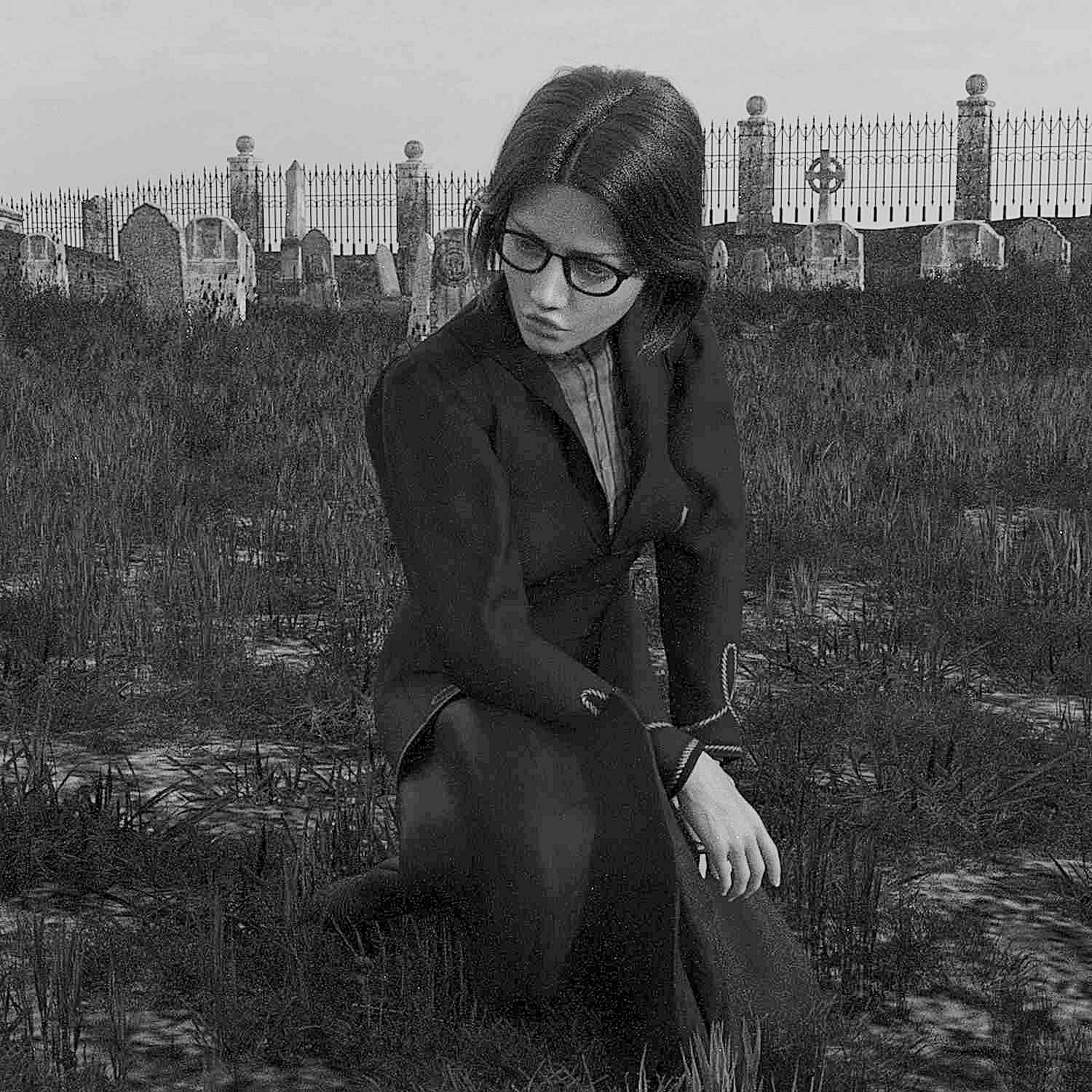
As the author of the Patience Worth mystery series, I’ve often been asked about my creative process. How does one bring to life a character like Patience, a young Victorian woman who works at the Marylebone Public Library while secretly investigating both rational and irrational mysteries? Today, I’d like to share the method behind the madness of creating Gothic mysteries that blend historical accuracy, supernatural elements, and meticulous detective work.
Finding Patience Worth: Character as Foundation
Every mystery in my series begins with Patience herself. Born in February 1880 to a mathematics professor and a former governess, Patience lost her mother to pneumonia at twelve and essentially raised herself among the shelves of their extensive home library. This early independence and immersion in books, particularly penny dreadfuls and detective stories, formed the foundation of her investigative mind.
When developing Patience, I wanted a protagonist who would challenge Victorian conventions while remaining believably of her time. Her chestnut hair typically styled in a “practical Gibson Girl updo with wayward tendrils that escape throughout the day” and her habit of sewing pockets into her modest dresses to carry her “small notebook, magnifying glass, protective charms, and other improvised detective tools” reflect both her practicality and her subtle rebellion against societal constraints.
The most crucial aspect of Patience’s character is her dual nature, her ability to navigate both the rational world of detective work and the shadows of the unexplained. This duality creates tension in every mystery and allows me to explore cases that straddle the line between conventional crime and the supernatural.
The Attic Room: Creating Patience’s World
Setting plays a vital role in my mystery plotting. Patience’s attic room at Mrs. Finch’s boarding house serves as both character development and plot device. This space, transformed into “an archive of information” with “meticulously organized newspaper clippings of unsolved crimes and unexplained phenomena” and “maps of London neighborhoods marked with colored pins”, reveals her methodical mind and obsessive attention to detail.
The wooden crates lining her eastern wall contain her carefully categorized library: detective fiction, criminal psychology, legal references, and obscure volumes on folklore and mysticism, many “borrowed” long-term from the library’s reference section. This detail not only shows her dedication but provides a believable source for her unusual knowledge base.
When plotting a new mystery, I often begin by imagining what new clippings, books, or strange artifacts might find their way into this room. For “The Anatomy of Shadows,” the first appearance of newspaper reports about grave robberies sparked Patience’s interest long before her uncle Frederick officially sought her help.
Uncle Frederick: The Bridge Character
Uncle Frederick Blackwood, Patience’s mother’s brother, serves a crucial function in my plots. As a “former military man turned private investigator with an interest in the occult,” he provides Patience with both mentorship and access to cases beyond her reach as a young woman in Victorian society.
Now in his early sixties with rheumatism affecting his mobility, Frederick increasingly relies on Patience’s “sharp eyes, nimble mind, and surprising willingness to venture where others fear to tread.” Their relationship, with Frederick teaching her “lockpicking, disguise work, and the art of unobtrusive questioning of witnesses who claim to have seen impossible things”, creates a believable apprenticeship structure within the constraints of the era.
For each book in the series, I carefully calculate how much Frederick will participate in the investigation. In “The Anatomy of Shadows,” his connections to Scotland Yard provide the official entrée into the case, but his physical limitations ensure Patience must do the dangerous fieldwork herself.
The Pattern Board: Plotting Mysteries Through Patience’s Method
My approach to plotting mysteries mirrors Patience’s own methodology. Just as she creates a “hand-drawn timeline of London’s most notorious unsolved crimes” on the sloped ceiling above her bed, “connected with red string to possible suspects, motives, and theories both conventional and extraordinary,” I develop elaborate visual maps of each mystery.
For “The Anatomy of Shadows,” I began with a central image, desecrated graves, and worked outward, connecting historical events, character motivations, and Victorian scientific theories. This process led me to Dr. Winthrope and his obsession with improving upon Frankenstein’s work through a coldly calculated approach to reanimation.
A crucial scene in the novel shows Patience’s investigative process in action:
“She sat, staring at the board, until the shapes began to move in the corners of her vision… When she looked up, the lamp’s light had guttered, but the lines of her evidence were brighter than before, every thread alive with purpose. The pattern was complete, and the next move was hers.”
This moment, when disparate clues suddenly crystallize into a coherent pattern, is what I strive to create in my own plotting process, though it usually takes me considerably longer than it takes Patience!
The Notebooks: Documenting the Investigation
Patience’s notebooks serve as both plot device and structural element in my mysteries. Her habit of documenting “every detail” in her notebook with “words cramped and spidery” represents her belief that meticulous documentation is “the only defense against the magnitude of what she had found.”
I mimic this process by keeping detailed character journals during my writing. For “The Anatomy of Shadows,” I maintained a separate notebook for each major character, writing entries in their voices to better understand their motivations and knowledge at different points in the story.
A pivotal scene shows Patience at a graveyard:
“Before leaving, she stood for a long moment, notebook open, staring at the row of mounds. They did not feel like the solution, only another link in the chain. But they were not random, and they were not innocent. She was certain, now, that whoever had made them would return.”
This perfectly captures my approach to mystery plotting, recognizing that each clue is “not the solution, only another link in the chain,” while understanding the patterns that suggest where the story must go next.
The Dual Mystery: Balancing Rational and Irrational
The hallmark of the Patience Worth series is the tension between rational explanation and supernatural possibility. Patience herself straddles this line, having “begun anonymously solving small mysteries for library patrons” by “finding lost heirlooms, identifying neighborhood petty thieves, and occasionally, explaining seemingly supernatural occurrences through careful observation and research.”
When plotting each book, I develop two parallel explanation tracks, one entirely rational and one incorporating supernatural elements. As Patience investigates, these tracks weave together, sometimes reinforcing and sometimes contradicting each other, until the climax reveals which explanation (or combination) is correct.
In “The Anatomy of Shadows,” Dr. Winthrope’s experiments represent this duality, his methods are based on scientific principles, however misguided, while the results venture into the realm of the supernatural. This allows me to explore Victorian anxieties about science overreaching its boundaries while satisfying readers’ desire for both logical puzzle-solving and Gothic atmosphere.
The Library: Research as Foundation
The Marylebone Public Library, where Patience works, symbolizes my own research process. Just as she “meticulously organizes the reference section while secretly reading every detective novel, true crime account, and obscure tome on folklore and supernatural phenomena available,” I immerse myself in Victorian primary sources before plotting each mystery.
For “The Bodiam Abominations,” I researched not only Frankenstein and its scientific inspirations but also Victorian funeral practices, grave robbery cases, the architecture of Bodiam Castle, and Scotland Yard’s procedures in the late 1890s. This research provides the authentic historical foundation upon which I build the more fantastical elements of the plot.
The library also serves as a reflection of Patience’s mind, orderly but containing hidden depths. The “January light is thin and sickly as she works behind the returns counter,” sorting through books “inscribed with the minor violence of daily use: dog-ears, thumb prints, the occasional rust-brown stain of tea or blood.” This perpetual “half-twilight, thick with dust motes” creates the liminal space where rational knowledge and irrational possibilities can coexist.
The Timeline: Pacing and Historical Anchoring
Each Patience Worth mystery is carefully anchored in its specific historical moment. “The Anatomy of Shadows” takes place in 1898, when Patience is eighteen and has secured her position at the library “against her father’s wishes for her to become a governess.” This places the story in the late Victorian era, after the Jack the Ripper murders but before the death of Queen Victoria, in a time when scientific advancement and spiritualist beliefs were often in direct conflict.
When plotting the timeline of each mystery, I work backward from the climax, carefully calculating how long each investigation step would realistically take given the transportation and communication limitations of the era. This creates the logical structure underlying the more atmospheric elements of the story.
Patience’s own approach mirrors this method. She “approached the problem as she had approached every other: by making the irrational small enough to fit inside a set of rules.” By establishing clear timelines and careful pacing, I create mysteries that satisfy both as puzzles and as atmospheric Gothic tales.
The Evidence: From Mundane to Macabre
The physical evidence in each mystery progresses from mundane to increasingly disturbing, pulling both Patience and the reader deeper into the case. In “The Bodiam Abominations,” this progression begins with newspaper reports of grave robberies, advances to the murder of a caretaker with his “hair the color of slush, his eyes small and wet-set,” and culminates in the discovery of Dr. Winthrope’s laboratory beneath Bodiam Castle.
When plotting, I create an “evidence map” showing what clues Patience discovers, when she finds them, and how they connect to other elements of the mystery. This ensures that the progression feels organic while maintaining the necessary revelations to drive the plot forward.
Patience’s investigation often involves “blueprints, scavenged from the city records office under the guise of” legitimate research, allowing her to discover hidden connections others miss. Similarly, I gather maps, floor plans, and historical documents to ensure the physical spaces in my mysteries are accurately represented.
Conclusion: The Pattern Complete
Like Patience with her evidence board, my plotting process ultimately aims to make “every thread alive with purpose” so that “the pattern is complete” before I begin writing. The Patience Worth series allows me to explore the fascinating contradictions of the Victorian era, scientific advancement alongside spiritualist beliefs, rigid social structures beginning to crack under pressure, and women like Patience finding ways to pursue their passions despite societal constraints.
As I continue to develop new mysteries for Patience to solve, I remain guided by her essential character, a young woman whose “greatest frustration is society’s limitations on women and its rigid devotion to purely rational explanations, yet she remains determined to find a way to apply her natural investigative talents to cases others fear to touch.”
In each book, including “The Anatomy of Shadows,” I strive to create mysteries that honor both Patience’s methodical mind and her willingness to consider explanations beyond the conventional, mysteries where the rational and irrational dance together in the perpetual “half-twilight, thick with dust motes” that characterizes both Victorian London and the human psyche itself.