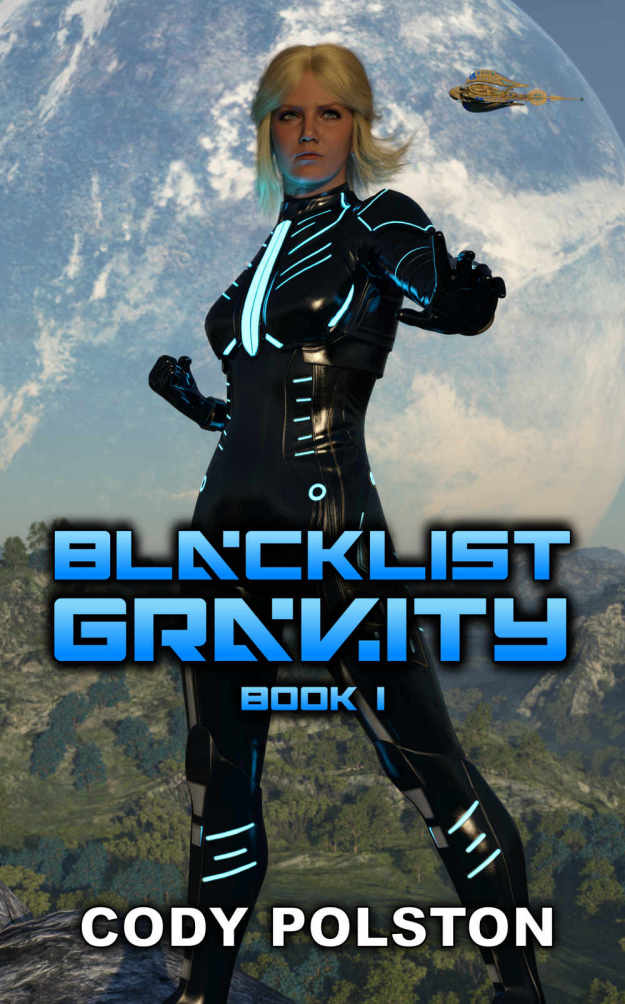
There’s a particular kind of science fiction that doesn’t try to predict the future so much as expose the present. It takes familiar systems, policing, bureaucracy, surveillance, propaganda, and moves them into a colder environment where excuses fall away. In space, you can’t pretend you didn’t see what happened. The air is finite. Doors lock. Records either exist or they’ve been erased on purpose. Blacklist Gravity lives in that tradition. It’s a high-velocity sci fi thriller on the surface: a licensed bounty hunter, a hostile station, an outlaw network, and a chain of events that turns one “routine” retrieval into a disaster with political teeth. But underneath the pursuit mechanics is something sharper: a story about how states justify harm, how good people get used as tools, and how mercy becomes dangerous in systems that depend on dehumanization. This article explores what the book is really about, its social messages, its injustice themes, and why its protagonist’s quiet compassion matters, without spoiling the plot’s major turns.
The hook: a bounty hunter who isn’t a monster
Many stories with bounty hunters lean on swagger, cynicism, or violence-as-style. Blacklist Gravity does something more unsettling: it makes its protagonist credible as a person who tries to do the job “right.” Sága Hrafnrún works legally, with a license and procedures, as part of a Dominion enforcement lineage. Her reputation is built on clean captures, targets returned alive, collateral minimized, evidence properly logged. She doesn’t romanticize criminals, but she doesn’t indulge cruelty either. Her compassion is not performative; it’s quiet and often invisible, expressed through small mercies that keep people from falling into the system’s grinder. That characterization is crucial to the book’s social critique. If the lead were openly vicious, the message would be easy: violent agent does violent things, the system is bad. But Sága is disciplined, professional, and privately empathetic. She’s the kind of person an authoritarian state loves to recruit because she can make the machine look ethical. And that’s where the story’s first moral question lands: What happens when a system depends on good people to make injustice feel lawful?
Bureaucracy as a weapon: how “procedure” becomes violence
One of the book’s strongest injustices isn’t a gunfight. It’s the way paperwork, protocols, and “risk management” are treated as moral shields. In Blacklist Gravity, the Dominion doesn’t always need to be overtly sadistic. It can simply be efficient. Containment orders, identity scans, locked sectors, audits, and classified directives become tools that turn people into numbers and neighborhoods into acceptable losses. When the institution is built to protect itself, procedure stops being a path to fairness and becomes a way to distribute harm while keeping hands clean. This mirrors a real-world dynamic: injustice often thrives not because everyone is cruel, but because cruelty gets rebranded as policy. Once harm is expressed in abstract language, security, stability, compliance, threat reduction, it becomes easier for ordinary workers to participate without feeling responsible. The book repeatedly circles the same tension: Sága believes in rules because rules can protect the vulnerable; the Dominion uses rules to decide who counts as vulnerable. That second line is where the rot lives. If an institution can redefine personhood through classification, citizen, offender, insurgent, contaminant, then law isn’t law anymore. It’s a sorting algorithm. And the people at the bottom rarely get to appeal.
The station as a social metaphor: scarcity makes morality visible
The setting, a debris-market space station, does more than provide atmosphere. It functions like a pressure chamber for social inequality. Stations in this kind of fiction are rarely egalitarian. They’re stacked: privileged decks with breathable air and clean corridors, and lower levels where people barter, patch leaks, and disappear. A salvage economy is a survival economy. Every bolt has a price. Every door has a gatekeeper. And “refugee” stops being a legal term and becomes a permanent caste. That matters because the book is concerned with who the law is for. In a fragile environment, authorities justify harshness by invoking stability: if disorder spreads, everyone dies. It’s a persuasive argument. It’s also the easiest excuse in the universe. The novel’s insight is that scarcity doesn’t create injustice, it reveals it. When resources are finite, the system’s true priorities become undeniable. Who gets medical care. Who gets scanned. Who gets locked in. Who gets evacuated. On a station, every policy decision has immediate consequences. You can’t hide behind distance.
“Outlaw” as a label: criminality, survival, and moral convenience
A major theme in Blacklist Gravity is the elasticity of the word criminal. Frávik and the Unwritten network are hunted as outlaws, yet the story complicates the idea without turning it into a simplistic “rebels good, empire bad.” Instead, it explores the messy truth: under an oppressive state, people break laws for different reasons. Some are violent. Some profit from chaos. Some exploit others. But some, often the ones most quickly erased, are simply trying to move medicine, relocate families, or build exit routes for those marked as disposable. That is one of the book’s social messages: when legal systems become unjust, morality and legality diverge. Once that divergence happens, authority leans heavily on labels. Smuggler. Terrorist. Threat. Not because the labels are always accurate, but because they make empathy feel irresponsible. Sága’s conflict is sharpened by this: she’s trained to see patterns of crime, to treat networks as threats, to close cases. But she also sees faces. She sees desperation. And she knows how easy it is to justify an atrocity with a file number. The story asks a hard question: If the law is wrong, what does it mean to be a lawful person?
Mercy as rebellion: why her compassion becomes dangerous
Sága’s defining feature is not that she’s the best shot or the best tracker, though she is capable. It’s that she tries to minimize harm. She saves lives that the system would write off. In many thrillers, compassion is treated as weakness. Here it’s treated as something else: a form of resistance. Authoritarian systems rely on fear, but also on inevitability. They want people to believe nothing can change, that compliance is the only survival strategy. Small mercies disrupt that narrative. They create witnesses. They create survivors. They create inconvenient stories. In Blacklist Gravity, mercy isn’t free. It has costs, receipts, and consequences. The book doesn’t romanticize moral purity. Sometimes trying to do the least harm still results in harm. Sometimes a merciful choice creates new dangers. That’s part of its emotional honesty. The injustice is not merely that the Dominion is oppressive; it’s that the institution can corner people into impossible decisions and then punish them for the outcomes. The book’s insight here is especially contemporary: a system can force you into complicity and still call you guilty.
Surveillance and identity: when the state claims your body
The story’s most chilling thread is not the chase. It’s the question of identity and ownership. Without revealing the book’s key twists, Blacklist Gravity centers around the idea that identity can be verified, scanned, certified, and most frighteningly, invalidated. The Dominion doesn’t just enforce law; it enforces reality through records. If your template doesn’t match, your life doesn’t count. If your data is sealed, you don’t exist. If you’re corrected, you’re fixed. This is where the book’s science fiction concept, template technology, deep scans, classified logs, becomes a social metaphor for modern systems of control. In many real-world contexts, identity already functions like this: papers, databases, biometrics, background checks. The question isn’t whether these tools can be useful. The question is who controls them and what happens when the system decides you’re an error. The injustice is existential: you can be loyal and still be rejected; you can be useful and still be disposable; you can be legal right up until the moment the law changes its mind about you.
The blacklist as gravity: why the title matters
The phrase “blacklist” suggests more than a file. It suggests a social death: being marked, tracked, denied opportunities, and treated as a hazard. “Gravity” adds a second layer, inescapable pull, mass, inevitability. Put together, Blacklist Gravity becomes an idea: once the state marks you, the mark has weight. It changes how doors open, how people look at you, how allies calculate risk. It doesn’t just pursue you. It reshapes the space around you. That’s a powerful metaphor for stigmatization in real life, where labels, criminal record, undocumented status, debt, suspect, enemy, can function like a physical force. People don’t just fear punishment; they fear association. And institutions count on that fear to isolate targets.
Why the book resonates now: injustice without caricature
A strength of Blacklist Gravity is that its critique isn’t delivered as a lecture. It’s embedded in the thriller architecture. The reader feels the pressure of deadlines, locked corridors, competing squads, and official lies that arrive in calm voices. The injustice is not abstract; it’s experienced in the way information is withheld, the way threats are normalized, and the way harm is framed as necessity. Importantly, the book doesn’t pretend the protagonist is untouched by the system she serves. Sága benefits from legitimacy. She has access. She has protection, until she doesn’t. Her awakening isn’t sudden righteousness; it’s the slow collapse of deniability. That’s often how moral turning points happen in reality: not when someone learns that wrongdoing exists, but when they learn they can’t keep their hands clean while staying inside it.
The moral center: what does “least harm” mean in a violent machine?
At its heart, Blacklist Gravity is about a person trying to practice harm reduction in an institution designed to maximize control. Sága’s approach, minimizing casualties, protecting bystanders, refusing to weaponize innocents, feels almost radical because the environment treats human beings as logistics. Yet the story refuses easy answers. Doing less harm doesn’t erase harm. Choosing mercy can still cost someone else. Acting against unjust orders can trigger consequences that hurt the people you wanted to protect. That’s the book’s most mature message: in an oppressive system, there are no choices without damage, only choices about where the damage lands, and whether you accept it as normal.
What readers can expect, without spoilers
Readers who pick up Blacklist Gravity should expect a fast-paced, claustrophobic space-station thriller with a procedural edge: evidence logs, chain-of-custody tension, interrogations, and competing enforcement factions. They should also expect morally gray dilemmas, not because the book is cynical, but because it takes power seriously. The action isn’t just spectacle; it’s consequence. The politics aren’t window dressing; they’re the engine that makes ordinary people disposable. Most of all, readers should expect a protagonist whose humanity is expressed in quiet decisions, small mercies that become larger risks, and a setting that forces every moral choice to be made under pressure, in public, with someone watching.
The takeaway: science fiction as a mirror that doesn’t blink
The best science fiction doesn’t ask, “What if?” as an escape. It asks “What is?” from a different angle. Blacklist Gravity uses its bounty-hunter premise to examine a familiar, uncomfortable reality: institutions can commit injustice while calling it safety, and they can recruit good people to do it. It also offers a slim but potent counter-idea: compassion is not weakness, it’s a refusal to let systems define who deserves to be protected. In a universe of sealed files, locked doors, and identity scans, Blacklist Gravity argues that the most dangerous thing you can be is a person who still chooses mercy, especially when the law tells you not to.