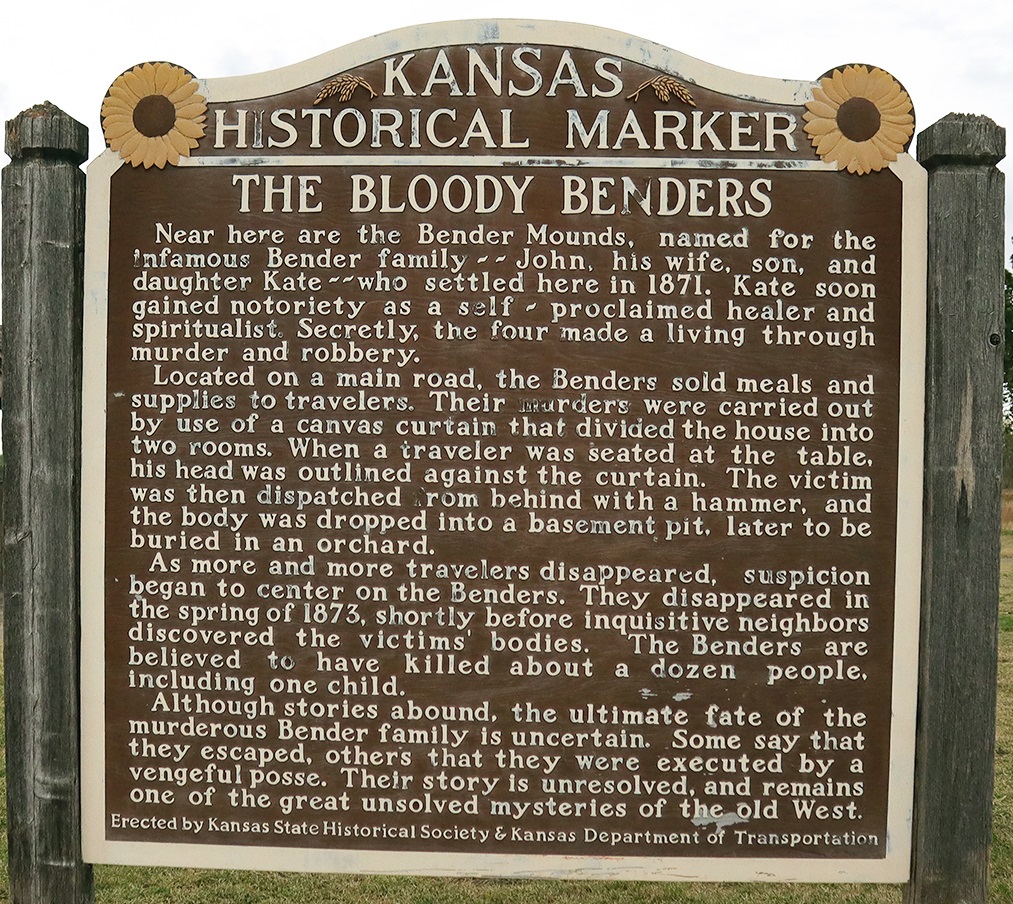
In the annals of true crime, few tales are as chilling, bizarre, or steeped in mystery as that of the Bloody Benders. Operating under the guise of hospitality, this seemingly ordinary family ran a small inn and grocery store in the wilds of Kansas during the early 1870s. Their business, however, was a front for something far more sinister. Over the course of a year, the Benders lured travelers into their establishment, only to brutally murder them and dispose of their bodies. By the time their crimes were discovered, the family had vanished into the ether, leaving behind a legacy of horror and unanswered questions.
The Benders’ story unfolds in Labette County, Kansas, a remote and sparsely populated area during the post-Civil War era. The region, like much of the American frontier, was a place of opportunity and lawlessness. As settlers moved westward in search of land and fortune, they often traveled alone or in small groups, making them easy targets for those with malicious intentions.
It was in this untamed environment that the Bender family established their modest inn and grocery store in 1871. Their property sat along the Osage Trail, a well-traveled route for pioneers heading west. The family consisted of four members: John Bender Sr., his wife Elvira, their son John Jr., and their daughter Kate. They were an unusual household, to say the least. The elder Benders were German immigrants who spoke little English and were described as gruff and unapproachable. John Jr. and Kate, on the other hand, were more sociable, with Kate playing a particularly prominent role in the family’s dark enterprise.
Kate Bender was the face of the operation, and her charm proved to be a deadly weapon. In her early twenties and reportedly attractive, Kate portrayed herself as a spiritualist and healer. She claimed to have powers that could cure ailments and communicate with the dead, a belief that was not uncommon in the 19th century. Her supposed abilities, combined with her flirtatious demeanor, made her a magnet for unwary travelers.
Kate often held séances at the inn, luring guests into a false sense of security. She also advertised her services in local newspapers, drawing people to the inn from miles around. It was during these gatherings that the family’s trap was sprung.
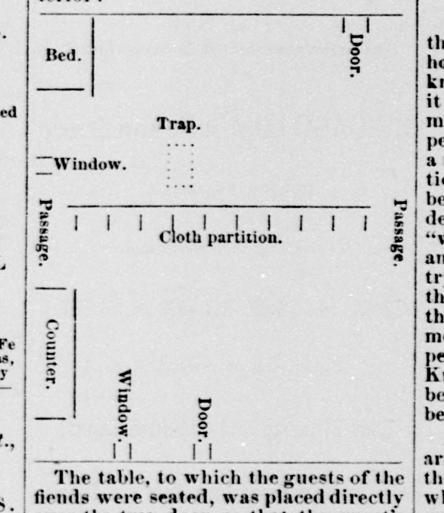
The Benders’ method of killing was as calculated as it was gruesome. Guests who appeared wealthy were seated at the head of the dining table, which was positioned against a curtain that divided the room. Behind the curtain, one of the male Benders waited silently with a hammer. As the guest dined or conversed with Kate, they were struck on the head from behind. The blow was usually fatal, but if the victim survived, their throat was swiftly slit by another family member.
The body was then dropped through a trapdoor beneath the chair, which led to a cellar. In the dead of night, the Benders would drag the corpse out to their orchard, where it was buried in shallow graves. The family’s operation was disturbingly efficient, and they repeated this process numerous times over the course of a year.
The Benders’ reign of terror might have continued indefinitely if not for the disappearance of Dr. William York, a well-known and respected physician. Dr. York had been traveling from Fort Scott to Independence, Kansas, in the spring of 1873, but he never reached his destination. His brothers, Colonel Ed York and Kansas State Senator Alexander York, launched an investigation into his disappearance. Their efforts led them to the Bender property.
When questioned by Colonel York, the Benders denied any knowledge of Dr. York’s fate. However, their behavior aroused suspicion, and the York brothers continued to investigate. Shortly thereafter, neighbors noticed that the Bender property appeared abandoned. The family had fled, leaving behind their belongings and a house of horrors.
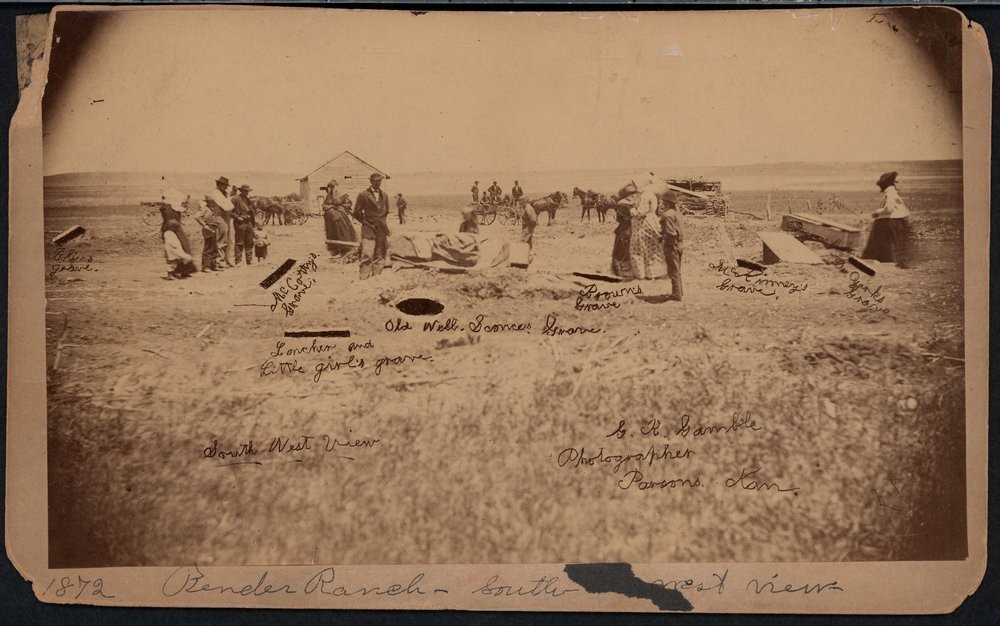
When authorities and local volunteers searched the Bender property, they made a series of grisly discoveries. The cellar beneath the house was stained with blood, and the stench of death was overwhelming. In the orchard, investigators unearthed several shallow graves containing the remains of at least a dozen victims. Among them was Dr. William York, whose skull bore the telltale signs of a hammer blow.
The victims were primarily lone travelers, many of whom were carrying cash or valuables. The Benders’ crimes appeared to be motivated by greed, though the sheer brutality of their methods suggested a sadistic streak as well. The discovery shocked the nation, and the press quickly dubbed the family the “Bloody Benders.”
Despite an intense manhunt, the Benders were never captured. Their disappearance remains one of the most enduring mysteries of the case. Some believed they fled to another state or even another country, while others speculated that they met a violent end at the hands of vigilantes. Over the years, numerous individuals were arrested on suspicion of being members of the Bender family, but none were conclusively identified.
Theories about their fate range from the plausible to the fantastical. Some accounts suggest that Elvira and Kate were apprehended and lynched by an angry mob, while others claim the family assumed new identities and continued their murderous ways elsewhere. Without definitive evidence, the truth remains elusive.
The Bloody Benders hold a unique place in American history as one of the first recorded cases of serial killings in the United States. Their story has been retold in books, documentaries, and even folklore, cementing their status as a macabre legend of the Old West. The case also highlighted the challenges of law enforcement in a frontier society, where criminals could easily disappear into the vast wilderness.
In the years since the Benders’ crimes, their former property has become a site of morbid curiosity. Though the original house no longer stands, visitors still trek to Labette County to catch a glimpse of the infamous orchard. The story of the Benders serves as a grim reminder of the darkness that can lurk behind the most unassuming facades.
The tale of the Bloody Benders continues to captivate audiences for several reasons. First, their methods were horrifyingly methodical, transforming the concept of hospitality into a death trap. Second, the mystery surrounding their fate adds an element of intrigue that keeps people speculating to this day. Finally, their story taps into primal fears about trust and vulnerability, reminding us that evil can hide in plain sight.
In a broader sense, the Benders’ crimes reflect the perils of life on the frontier, where isolation and lawlessness created the perfect conditions for predators to thrive. Their case serves as both a historical curiosity and a cautionary tale, a chilling reminder of the human capacity for cruelty.
The Bloody Benders may have disappeared without a trace, but their story lives on as one of the darkest chapters in American history. Their crimes shocked the nation, and their ability to evade justice has ensured their place in the pantheon of true crime legends. Over 150 years later, we are still haunted by the unanswered questions they left behind: How many lives did they claim? What became of them after their escape? And, perhaps most chillingly, could something like this happen again?
As we ponder these questions, the tale of the Bloody Benders remains a stark reminder of the thin line between civilization and savagery, hospitality and horror. Their story is not just a relic of the past, it is a warning that resonates to this day.